
How to Read a Nutrition Label: A Step-by-Step Guide
Last Updated on: 25th February 2026, 10:25 pm
What most people overlook on food labels — and how to read them with confidence.
We glance at calories, maybe sugar, and move on.
But once you understand the structure, it becomes much easier to make informed food choices. Quickly. Confidently.
This article provides the full overview. However, each section is also broken down individually if you prefer a deeper dive.
This guide references educational resources from the U.S. Food & Drug Administration (FDA), including their interactive nutrition label tool:
Quick Cheat Sheet
If you’ve ever felt confused reading a nutrition label, this is your starting point.
Once you understand how to read a nutrition label, food choices become clearer.
Start here:
• Serving size → everything is based on this
• Calories → only meaningful after serving size
• Sodium & added sugar → add up quickly
• % Daily Value → 5% is low, 20% is high
Understanding the structure makes food decisions clearer.
Watch the 60-second breakdown below.
This sample label shows the four main sections we’ll walk through below.
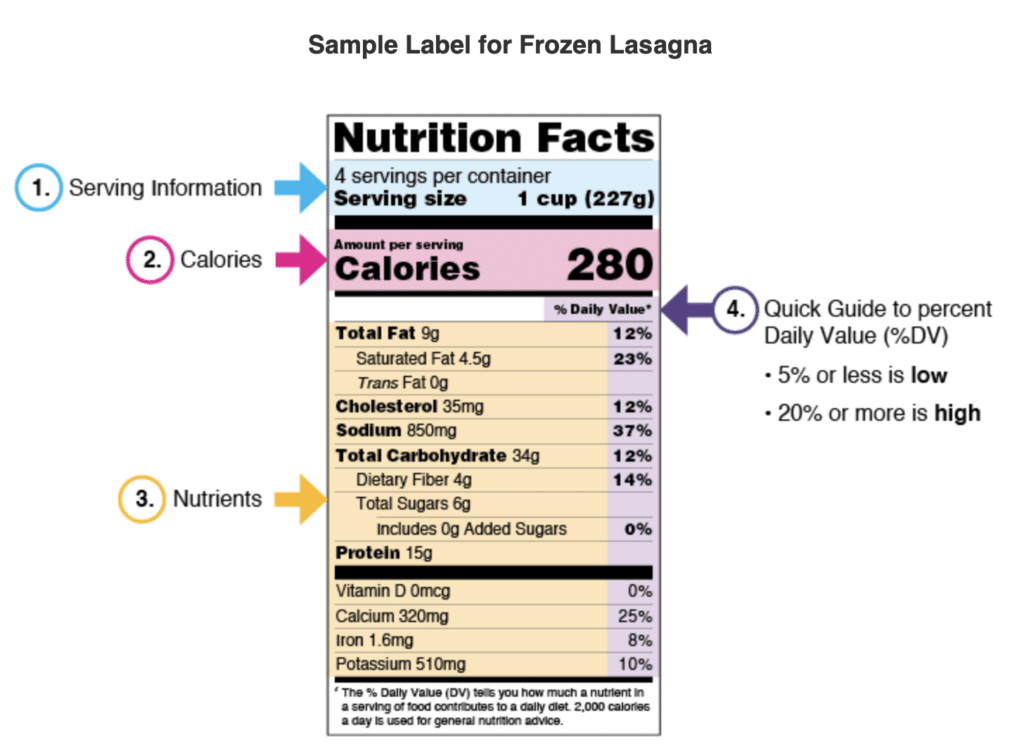
1. How to Read a Nutrition Label: START WITH SERVING SIZE
If you read nothing else, read this.
Serving size is the foundation of the entire label.
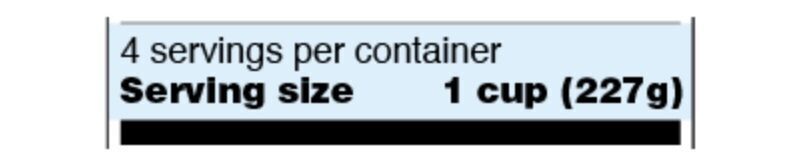
Everything on the label — calories, sodium, added sugar, % Daily Value — is calculated from this number.
The FDA explains that serving size reflects what people typically eat, not what they should eat. However, in practice, serving sizes don’t always match how we portion food at home.
In many cases, the listed serving size doesn’t reflect reality.
For example, if a package lists 2 ounces of ground beef as one serving and you eat 6 ounces, that equals three servings.
That means:
Three times the calories.
Triple times the sodium.
And three times the % Daily Values.
Similarly, when a label says ½ cup is one serving and you pour a full cup, you’re doubling everything listed.
Some products use “dual-column” labels showing values per serving and per package. That’s helpful.
Before analyzing anything else on the label, check the serving size first.
Always.
If you want a deeper breakdown, read Serving Size: The Foundation of a Nutrition Label.
Example of a dual-column Nutrition Facts label
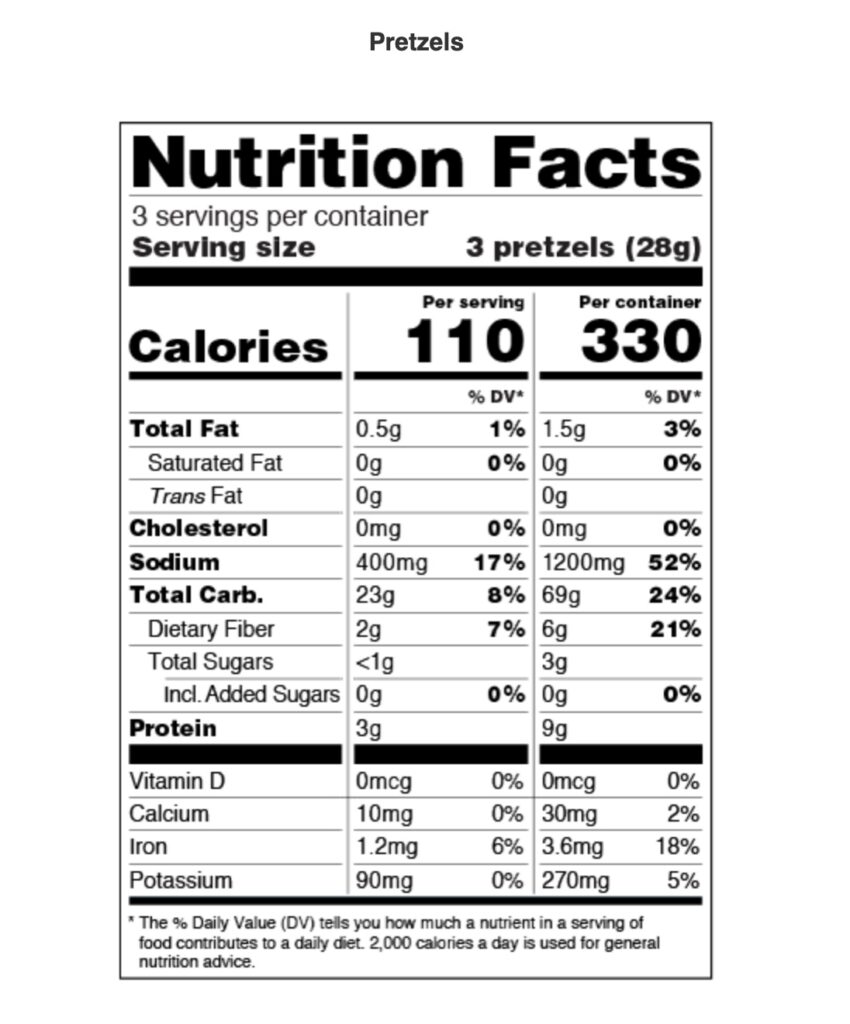
Notice how sodium jumps from 17% per serving to 52% per container.
As a result, that’s a very different nutritional picture.
2. Understanding Calories
Calories measure energy.
They’re not good or bad. They’re simply information about how much energy you’re getting per serving.
However, they don’t tell the full story on their own.
Most labels use a 2,000 calorie daily reference. That’s a general guideline for the average adult. Individual needs vary based on age, body size, activity level, and health conditions.
If you want a personalized estimate, you can calculate it here:
https://www.myplate.gov/myplate-plan
Just remember:
For that reason, calorie numbers only make sense once you understand serving size.
3. Nutrients to Limit and Nutrients to Prioritize
This is where labels become more meaningful. In fact, this section often determines the better choice between products.
Beyond calories, this section tells you what may impact long-term health.
Nutrients to Limit:
• Saturated fat
• Sodium
• Added sugars
Consistently high intake of these nutrients has been linked to higher risk of conditions like high blood pressure, heart disease, and type 2 diabetes.
Added Sugars Explained
Total sugars include all sugars in a product.
Added sugars are introduced during processing — such as sucrose, dextrose, or corn syrup.
Added sugars contribute calories without adding meaningful nutrients.
When consumed without fiber, protein, or fat, they can cause quicker rises in blood sugar followed by energy drops.
This isn’t about eliminating sugar entirely.
It’s about being aware of how much is coming from processed sources.
Nutrients Most People Need More Of:
• Dietary fiber
• Vitamin D
• Calcium
• Iron
• Potassium
While many people consume too much sodium and added sugar, many do not consume enough of these nutrients.
Fiber supports digestion, helps regulate blood sugar, and promotes fullness - which contributes to steadier energy.
Potassium helps counterbalance sodium in the body. And many people consume far more sodium than potassium.
Diets higher in fiber, calcium, vitamin D, iron, and potassium are associated with lower risk of conditions like osteoporosis, anemia, and hypertension.
Ultimately, this section gives you a snapshot of what the food contributes nutritionally — not just what it contains.
When I compare products, this is usually the section that makes the decision for me.
4. How to Read a Nutrition Label: Understanding % Daily Value (%DV)
The % Daily Value tells you how much a nutrient in one serving contributes to a daily diet.
General rule:
• 5% or less = low
• 20% or more = high
Example of how serving size affects % Daily Value for sodium
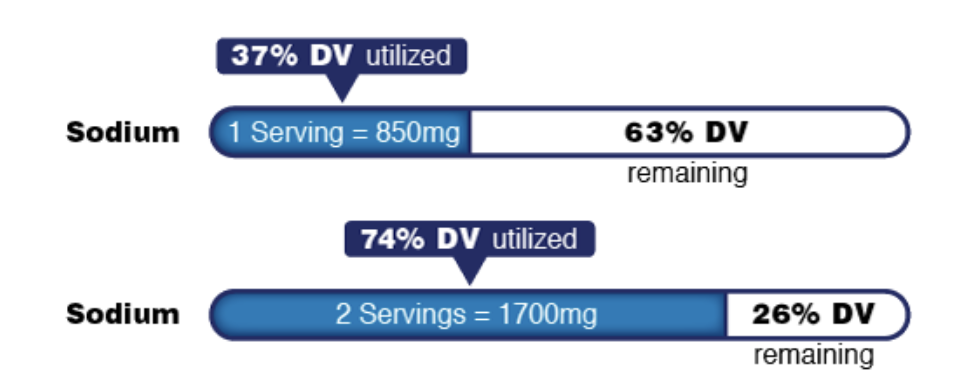
Notice how doubling the serving size dramatically increases the % Daily Value used for the day.
This makes comparing products easier.
For example, when one product contains 5% sodium and another contains 20%, you can quickly see which option is significantly higher.
However, % Daily Value is still tied directly to serving size.
When the serving size is small, the percentages may appear lower than what you actually consume.
Therefore, context always matters.
A Note on Health Conditions
The 2,000 calorie reference is a general guideline.
If you have high blood pressure, diabetes, kidney disease, or other health conditions, your nutritional needs may differ.
In those cases, reading labels becomes even more important.
When in doubt, consult your healthcare provider for individualized guidance.
How I Personally Read a Label (As a Chef)
When I pick up a product, I look at three things first:
- Serving size
- Sodium and added sugars
- The first three ingredients
That usually tells me most of what I need to know.
You don’t have to analyze every single line.
Just understand the structure.
And read intentionally.
Read With Intention
You don’t need to eat perfectly.
But understanding how to read a nutrition label gives you clarity.
And clarity leads to better decisions over time.
Once you understand it, it’s hard to unsee it.
Learning how to read a nutrition label is one of the simplest skills that can improve your long-term health decisions.